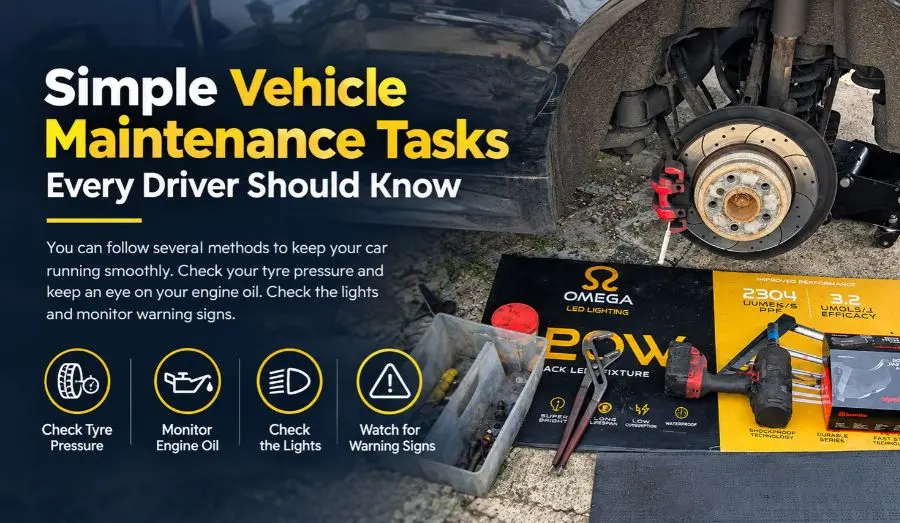
Summary: You can follow several methods to keep your car running smoothly. Check your tyre pressure and keep an eye on your engine oil. Check the lights and monitor warning signs.
———————————————————————-
Did you know your car does not always need a mechanic? Yes, you read it right. It needs a little attention from you. Regular vehicle maintenance can help prevent unexpected breakdowns, improve safety, and save you money in the long run. Guess the good news! Many basic maintenance tasks are surprisingly simple. Whether you are a new driver or have been behind the wheel for years, these four habits are worth adding to your routine.
Everyday Vehicle Maintenance Tasks You Should Know
Check Your Tyre Pressure and Condition
The tyres are your car’s only contact with the road. So, it should be a priority to keep them in good condition. Check your tyre pressure regularly, especially if your tyres are old. Look for visible cracks, cuts, bulges, or unusually worn tread. When was the last time you checked your tyres? If you can’t remember, consider doing it today; it takes only a few minutes.
Keep an Eye on Your Engine Oil
Engine oil keeps moving components lubricated and helps prevent excessive wear. Running with too little oil can cause serious engine damage. Park your car on level ground, switch off the engine, and allow it to cool if necessary. Check the oil level using the dipstick and top it up with the correct oil if required. Avoid overfilling, as it can cause another issue.
Check Your Lights and Windscreen Wipers
Good visibility is not just about clean windows. Your headlights, brake lights, indicators, and red lights all help you see and be seen. Walk around your vehicle occasionally when someone operates the lights, or use reflections from a wall or garage door to check them yourself. Also inspect your windscreen wipers. If they leave streaks, smear the glass, or make unpleasant noises, it may be time to replace them.
Monitor Fluids and Warning Signs
Your vehicle relies on several fluids, including coolant and screenwash. Check the levels carefully. Here is a tip. Never remove a coolant-system cap when the engine is hot. Most importantly, learn the dashboard warning lights. Unusual noises, smells, leaks, vibrations, or changes in braking and steering can also signal a problem. Make a note on your phone if you notice anything unusual. Small clues can help a mechanic diagnose problems faster.
We hope you find this blog valuable. However, if you want to learn more about our services or have specific questions, get in touch without delay.